
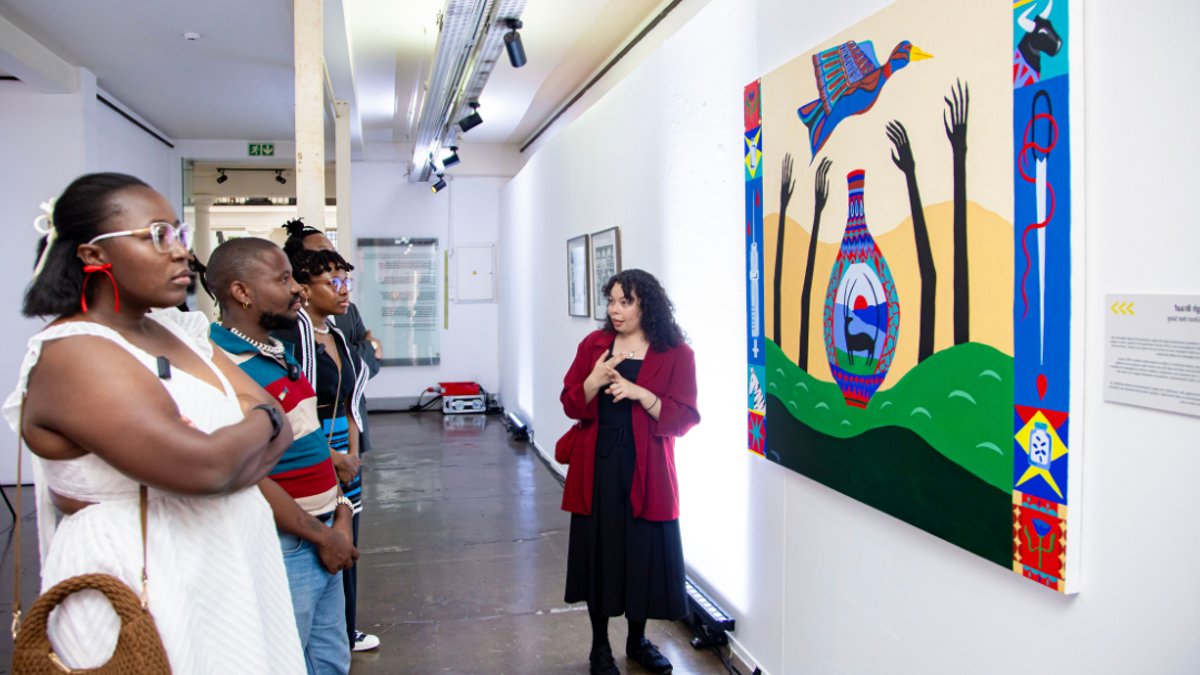
The exhibition Zero is Greater, currently on display at the Women’s Jail at Constitution Hill in Johannesburg, brings together art, science, and the ongoing effort to improve access to healthcare in South Africa, with a focus on the country’s HIV and TB journey. The setting of the exhibition is deliberate, as it highlights the country’s history of exclusion and struggle for justice, which are still tangible today.
South Africa has made substantial progress in combating HIV and TB through treatment, testing, research, activism, and public-health programs. However, these gains are not universal, and the diseases continue to affect families and communities, with scientific advances often meaning little to those who cannot access the necessary services.
The Exhibition’s Focus
The exhibition showcases the work of seven commissioned artists, who offer a unique perspective on the HIV and TB response, considering the grief, care, stigma, and everyday freedoms that are often overlooked in public health statistics. Their work does not offer a single answer to what “zero” means in the context of HIV and TB, but rather presents an exploration of the complexities surrounding these diseases.
Alongside the art, the exhibition features examples of HIV prevention options, TB vaccine research, new approaches to diagnosis, and support for people starting or remaining on treatment. These tools and technologies are essential, but their effectiveness depends on the presence of health workers, functioning services, and community support to bring them into people’s lives.
The Artists’ Perspectives
The artists’ work is characterized by its diversity and depth, with each piece offering a distinct perspective on the HIV and TB response. For example, Lebogang “Mogul” Mabusela’s work, Tell Me Baby, Are You Winning?, considers the many people whose contributions shape the response to these diseases, while Amy-Leigh Braaf’s A Refracted Ghost that Sang approaches remembrance through color, imagery, and personal history.
Sicelo Nene’s The Queen, The Angel and Death and The King, The Angel and Death place dignity, care, and mortality in the same frame, resisting the reduction of people affected by HIV and TB to their diagnoses. Dr. Ayobola Kekere-Ekun’s Tug of War, a textile work, suggests the tension between loss and possibility, capturing the uneasy balance between research, treatment, access, and care in changing lives.
The exhibition Zero is Greater is showing at the Women’s Jail, Constitution Hill, until 13 November 2026, and offers a unique opportunity to engage with the complex issues surrounding HIV and TB in South Africa.
This is a critical aspect of the exhibition, as it highlights the need to challenge traditional notions of masculinity and to promote a more detailed understanding of the complexities surrounding HIV and TB.
Artist Profiles
Dr Ayobola Kekere-Ekun, a Lagos-born artist based in South Africa, created Tug of War, a textile work that captures the balance between loss and possibility. Lebogang “Mogul” Mabusela, a Pretoria-based printmaker, imagines the HIV and TB response as a collective football effort in Are You Winning?. Amy-Leigh Braaf, a Cape Town-based painter, draws on her Cape Malay and Indonesian heritage in A Refracted Ghost that Sang.
Siyababa Mtshali, originally from KwaZulu-Natal, reworks symbols of protection and strength to explore vulnerability and manhood in Magalela 2026 and Induku: 4KOF. Serai Lobelo, an interdisciplinary artist, uses a plastic plate to trace a journey from loss to connection in MMM (Maso, Manyalo, Mekete).