
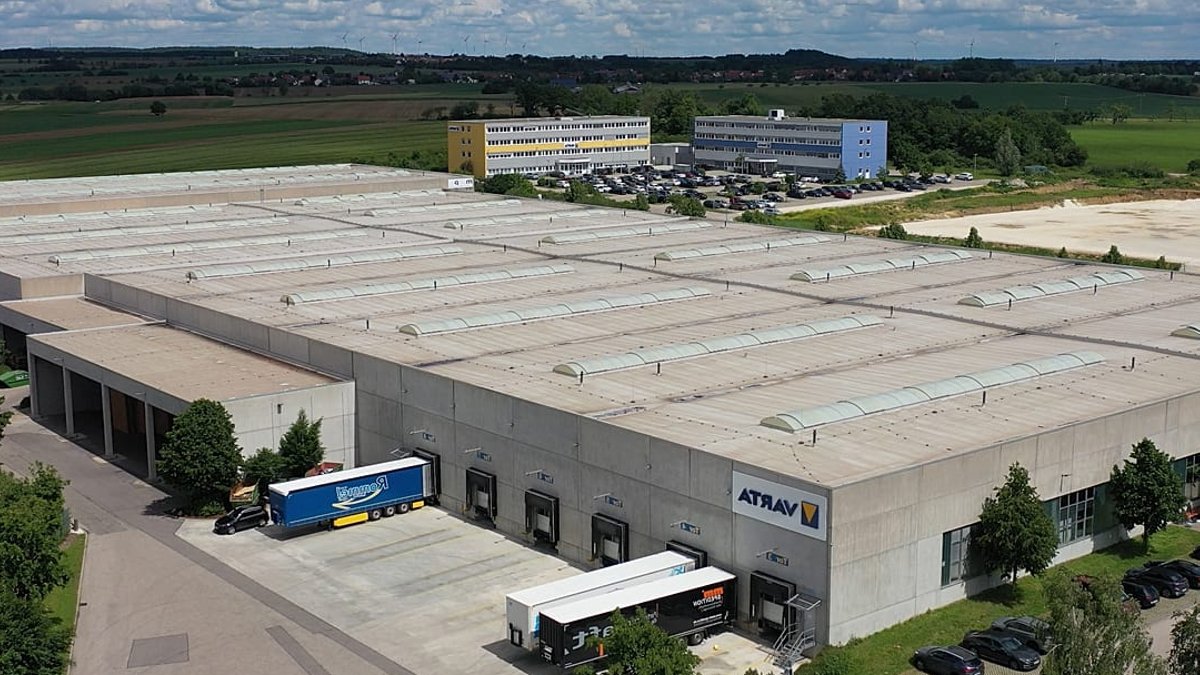
Varta filed insolvency proceedings on Friday as the German battery maker seeks court approval for self‑administration, driven by a projected funding shortfall that will emerge by 2027.
Bankruptcy filing and immediate impact
The parent company behind the Varta household battery brand submitted an application to the Stuttgart Local Court to open insolvency under self‑administration. The filing does not reflect an immediate cash crunch; instead, the firm warned of a structural financing gap that will become apparent after 2027.
Varta, headquartered in Ellwangen, cited deteriorating market conditions, weaker demand, adverse exchange‑rate movements and the recent loss of a key customer as reasons for the decision. Reports indicate that the customer is Apple, which plans to source rechargeable CoinPower button cells for its AirPods from manufacturers in China.
Chief executive Michael Ostermann said, “VARTA AG has faced significant challenges in recent quarters. We on the Executive Board and in management are fully aware of our responsibility to employees, customers, suppliers, and investors, and are working with all our strength to preserve as many jobs as possible, ensure the company’s continued sustainability, and create the best possible prospects for all stakeholders.”
Related: Achieving a Personalized Smile Makeover in San Francisco
Production will continue and employees will keep receiving wages and salaries. The profitable consumer battery division, Varta Consumer Batteries, remains legally separate and is not part of the insolvency process.
Subsidiaries and supervisory arrangement
Three operating subsidiaries are included in the filing: Varta Microbattery, Varta Micro Production and Varta Storage. These units will be addressed in separate applications alongside the parent firm.
The Stuttgart Local Court named Tobias Wahl, a lawyer with restructuring firm Anchor, as provisional supervisor. Under the self‑administration framework, Varta’s management retains control of daily operations while Wahl oversees the process on behalf of creditors.
Varta is a privately held entity after its delisting from the Frankfurt and Vienna exchanges in March 2025, following a restructuring plan that was declared complete in April 2025. Shareholders such as sports‑car maker Porsche AG and Austrian investor Michael Tojner have declined to provide additional capital, according to reports.
Related: PET scans predict arthritis treatment success
The household battery segment continues to operate independently, while the energy storage market is described by the CEO as a future‑oriented industry for the group.
This reflects a broader trend of tightening credit conditions for manufacturers reliant on high‑tech components, especially as major technology firms shift sourcing to lower‑cost regions. Such shifts can strain companies that depend heavily on a handful of large customers for revenue.
Maintaining a diversified product line while coping with volatile exchange rates and shifting consumer preferences remains a challenge. The ability to preserve jobs and sustain core operations will likely hinge on how quickly the company can adapt its supply chain and explore new markets.
Creditors will watch closely for any restructuring proposals that might allow the parent and its subsidiaries to emerge with a more resilient business model. The court’s provisional supervisor will play a key role in balancing the interests of employees, suppliers, and investors while seeking a viable path forward.