
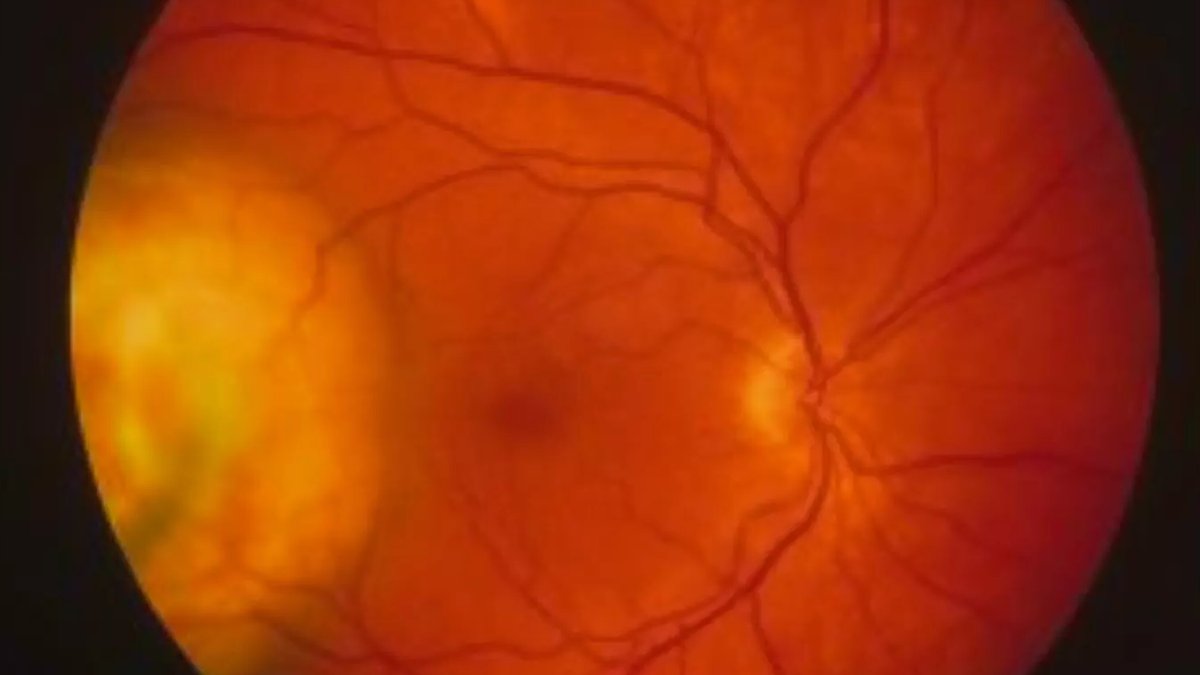
Researchers have identified a naturally occurring molecule, erucamide, that appears to help coordinate cellular communication in the retina, offering a potential new avenue to slow vision-loss diseases.
Retinal Damage and the Search for Signals
Degenerative eye conditions such as diabetic retinopathy, retinitis pigmentosa and age-related macular degeneration gradually destroy the retina, the light-sensitive tissue at the back of the eye. While the physical changes of degeneration are well documented, the chemical signals that guide retinal responses remain poorly understood.
The retina relies on constant coordination among neurons, glial cells, blood vessels and immune cells, forming a neurovascular unit that sustains visual function. Disruption of this unit accompanies the loss of photoreceptors, the cells that convert light into neural signals.
Earlier work showed that transplanted stem-cell-derived retinal cells could slow degeneration even after the transplanted cells vanished, hinting that secreted chemical cues might provide lasting protection. This observation prompted a collaboration among scientists at Scripps Research, UC San Diego and the Lowy Medical Research Institute to locate those cues.
Identifying Erucamide
The team employed mass-spectrometry-based metabolomics to profile small molecules in several animal models of retinal degeneration. Among dozens of changing compounds, erucamide levels fell sharply as photoreceptors began to die, suggesting a possible active role in disease progression.
Senior author Martin Friedlander, a professor at Scripps Research, says “The retina doesn’t simply deteriorate; in fact, it actively responds to injury.” He also notes, “Our work identifies erucamide as a signaling molecule that helps coordinate that response.”
Read Also: Robotic heart surgeries to rise in Delhi
Unlike many lipid molecules that serve only structural purposes, the compound belongs to a class of fats that can convey instructions between cells. Its decline early in degeneration set it apart from other metabolites that change later in the disease timeline.
Testing Therapeutic Potential
To assess whether restoring the molecule could modify disease course, researchers packaged the hydrophobic substance inside porous silicon nanoparticles. These engineered carriers release their cargo gradually and prevent clumping when injected into the eye.
Delivery of the compound activated a specific population of immune cells known as CD11b⁺ myeloid cells. The activation was dependent on the protein TMEM19, which binds erucamide; reducing TMEM19 levels blocked both cell activation and the protective effect.
Once stimulated, the myeloid cells emitted signals that promoted neurovascular stabilization, supporting both neuronal health and the blood-vessel network that supplies oxygen and nutrients. This cascade helped maintain retinal structure despite ongoing photoreceptor loss.
The treatment did not restore lost photoreceptors, but it slowed the rate of degeneration in the experimental models. Researchers observed a measurable preservation of retinal thickness and function over the study period.
Implications and Next Steps
The findings, published in Nature Neuroscience on June 19, 2026, suggest that erucamide is part of an intrinsic retinal defense mechanism. By bolstering this pathway, future therapies might delay the progression of diseases that currently lead to irreversible blindness. The discovery of erucamide’s role in retinal health may ultimately lead to new treatments for vision-loss diseases, offering hope for patients affected by these conditions.