
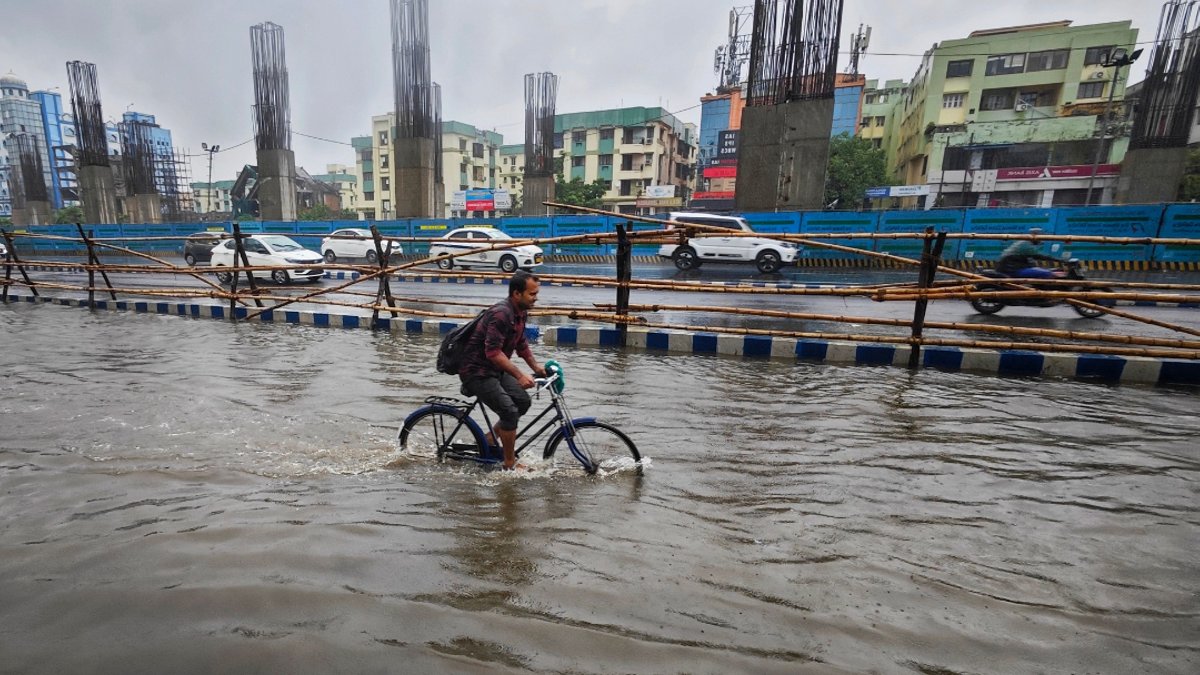
A single flood can destroy years of progress in HIV treatment. In April 2022, when heavy rains turned Durban’s streets into rivers, Mfundo Shezi lost everything: his identification documents, his shelter, and the month’s supply of antiretroviral medication he had depended on since 2021. For the first time in years, he missed a dose. Without his ID or a transfer letter from his clinic, he was denied entry at the nearest hospital. The flood did not change the virus—HIV remained equally infectious and treatable—but it broke the systems meant to control it.
This pattern is spreading across sub-Saharan Africa, where climate change is altering the fight against HIV not by making the virus more dangerous, but by making its management far more fragile. Extreme weather does not directly increase transmission, but it disrupts the routines that keep infections under control: clinic access, medication supply chains, and the ability to track patients when they are forced to relocate. A worst-case warming scenario predicts 25–37% more people in sub-Saharan Africa could be living with HIV by 2050.
Even minor disruptions cause major consequences. Every time a bad drought hits, when there is less than 20% of the normally expected rainfall, HIV infections could climb by 11% in rural areas in Africa, where many people already have HIV. Heavy rainfall and flooding can increase the chances of getting HIV by 14%, and make it 11% more likely for someone to get another sexually transmitted infection. The issue extends beyond biology; it is structural. When roads are destroyed, clinics close, and power grids fail, entire communities lose access to prevention tools like pre-exposure prophylaxis (PrEP) or the six-month HIV prevention shot, lenacapavir. HIV prevention meds lower someone’s chances to contract the virus to close to zero.
Floods erase medical records, leaving patients invisible
A photographer who received a blood transfusion after a flood in Malawi’s Blantyre district in 2023 described how the disaster revealed another vulnerability: the loss of medical records. Paper files, still the standard in most South African clinics, were carried away with homes. Without proof of identity or treatment history, patients like Shezi become invisible to the system. South Africa has spent a decade planning a national electronic health record system, but progress remains stalled outside the Western Cape.
Even if someone can get a transfer letter, which is needed to get treatment at a different clinic, they may be counted as someone who has stopped taking their medication in one place and considered a brand-new patient in another, something which could not only affect patient care but also skew how HIV cases are counted in national registers.
Related Post: Climate change poses trillion-dollar health risks
The worst effects fall on women. When extreme weather destroys livelihoods, survival often depends on trading sex for food or shelter. Research shows women in these situations are twice as likely to acquire HIV, not because the virus behaves differently, but because power imbalances remove their ability to negotiate safer sex.
Displacement breaks HIV treatment chains and mental health
In 2025, natural disasters displaced nearly 3 million people across sub-Saharan Africa. For someone on HIV treatment, even one missed dose can allow the virus to multiply, weakening the immune system and raising transmission risks. The 2009 floods in Namibia’s Ohangwena region left 41 health facilities unreachable, cutting off entire communities from care. The damage was immediate but also long-lasting. Patients who lost their medication often did not restart treatment, and survivors faced lasting psychological scars from instability.
Solutions do exist. After Cyclone Freddy in 2023, Malawi’s former health minister, Khumbize Kandodo Chiponda, admitted the country’s health system had failed, and acted. She pushed for digitized records, flood-resistant clinics, and emergency stockpiles of HIV drugs. South Africa’s Climate Change Act, which took effect in March 2025, includes provisions for a national adaptation strategy, but public health experts warn the focus is too narrow.
Climate shocks reverse hard-won HIV progress in Africa
South Africa’s vulnerability stems partly from being home to nearly 8 million people living with HIV, the highest number in the world, while facing shrinking global HIV funding. Between 2010 and 2023, new infections dropped by almost 60% in Africa, meaning that for every 10 people who were getting HIV in 2010, four got it in 2023. But the region could start losing those gains as climate shocks collide with shrinking HIV funding.
Coceka Nogoduka, a public health specialist who has shaped South Africa’s HIV and tuberculosis responses for 18 years, emphasized that the problem is not just lost medication or closed clinics; it is the systemic collapse when people cannot re-enter care after displacement. The delay in South Africa’s national electronic health record system, 10 years after its proposal, means most clinics still rely on paper files, which floods or fires destroy alongside homes. Only the Western Cape has fully implemented digital records, leaving the rest of the country exposed.