
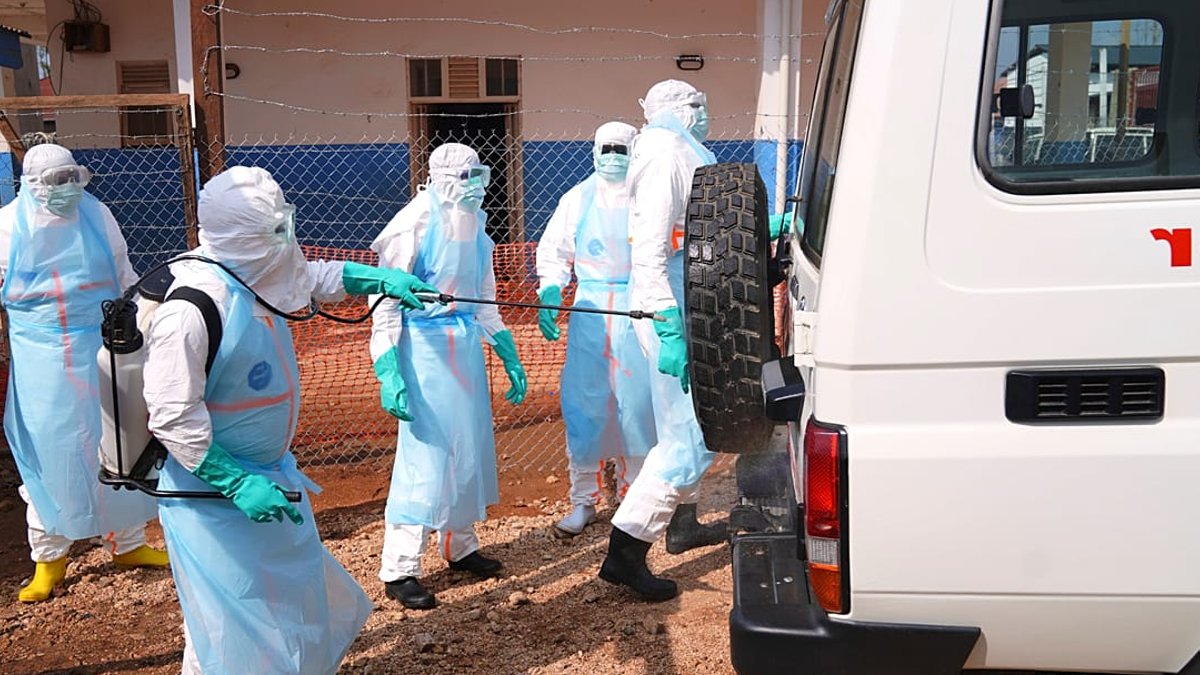
The Democratic Republic of Congo is dealing with the fastest-growing Ebola outbreak in history, a situation that health officials describe as becoming increasingly difficult to manage. While Congolese officials say the sharp rise in new cases appears to be slowing, they caution the outbreak has not yet peaked. The latest report by the country’s public health institute said transmission remains sustained, with recent fluctuations in cases likely influenced by reporting delays and ongoing data consolidation.
The outbreak declared on May 15 is unlike most previous instances of Ebola spreading through communities because the Bundibugyo virus responsible has no approved vaccines or treatments. “There’s never been an Ebola outbreak that started with so many cases because it was so late to be identified,” Trish Newport, emergency programme manager for Doctors Without Borders, told the Associated Press.
In a worst-case scenario, the current outbreak could approach the worst in history, according to computer modelling by researchers at the United States Centers for Disease Control and Prevention (US CDC) last month. The West Africa epidemic in 2014-2016, the largest Ebola outbreak to date, caused more than 11,000 deaths and took about eight months from the first case to reach 1,000 deaths.
The current outbreak is mostly concentrated in remote Ituri province, which accounts for nearly 90% of cases, but cases have also been confirmed in five other provinces, including one of Congo’s largest cities, Kisangani, and in neighbouring Uganda. Part of the outbreak is unfolding in a major city and humanitarian hub, Goma, that rebels backed by neighbouring Rwanda seized over a year ago, further complicating the response. Fighting involving the Rwanda-backed M23 rebels, attacks by the Islamic State-linked Allied Democratic Forces and mass displacement have complicated surveillance, contact tracing and access to affected communities.
Related: User Blocked by Online Platform Administrators
AP journalists noted that outsiders can be looked upon with suspicion, and community outreach teams have worked to spread the word about Ebola prevention measures in the face of abuse and accusations that the outbreak is a scam. Now there is unrest among local Ebola responders themselves after weeks of risky crisis work and little or no pay from the Congolese government. Some staff have gone on strike at treatment centres and blocked access. Striking staffers included epidemiologists, case investigators, drivers and gravediggers.
Lack of trust and resistance from locals remain one of the biggest obstacles to containing the outbreak, according to authorities and health workers. Rumours about Ebola treatment centres, fears of isolation and resistance to safe burials have led some people to avoid testing or seek care only after becoming critically ill. Responders are also struggling to understand how far the outbreak has spread and how much worse it might become, with only around 77% of known contacts monitored nationwide, well below the 95% target health officials say is needed to interrupt transmission.
While the WHO continues to assess the risk from the outbreak as “very high” inside Congo and “high” in Uganda, where it spilled over, and neighbouring countries, citing cross-border spread, frequent population movement and ongoing transmission in eastern Congo, the agency said the global risk of transmission is low. Ebola spreads through direct contact with an infected person’s bodily fluids rather than through the air, making it much harder to transmit than respiratory viruses. While the WHO says additional imported cases are likely as the outbreak grows, those cases have so far been rapidly detected and contained.
The Congo River, a major waterway connecting the affected regions, poses another logistical hurdle for aid groups attempting to deliver supplies. International organizations have struggled to secure adequate funding to support the massive operational requirements of this crisis. The medical imaging technology available for patient care is often outdated in remote clinics, further hindering accurate diagnosis.