
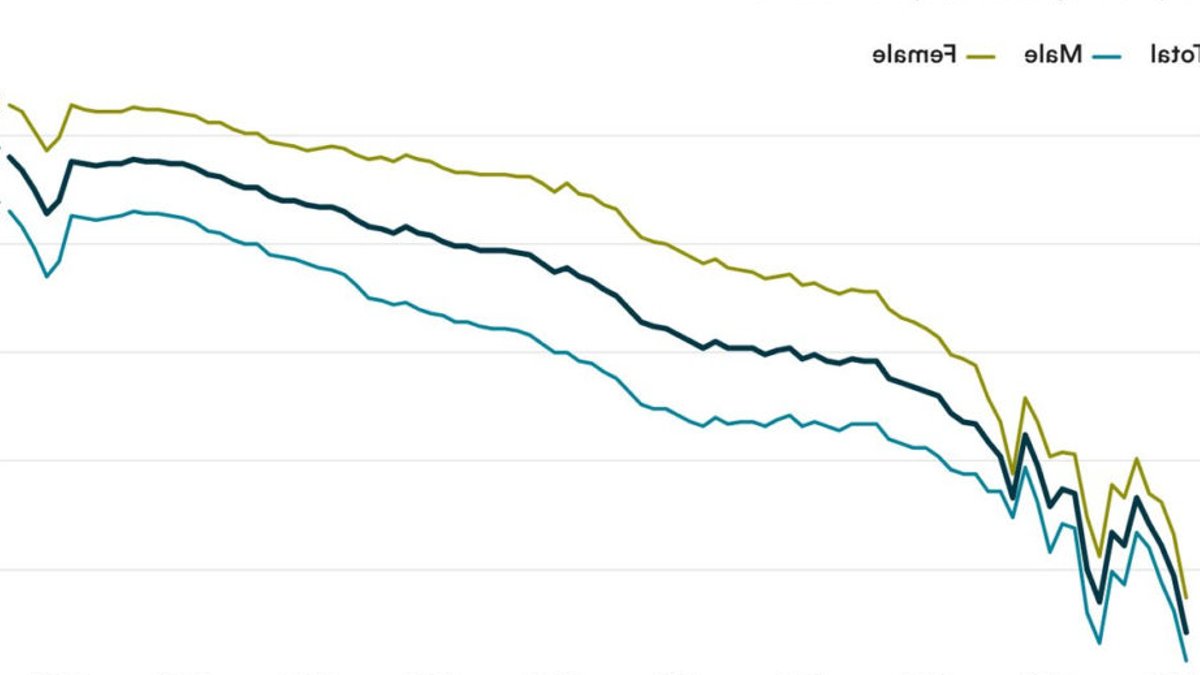
The Centers for Disease Control and Prevention released new life expectancy data this week, showing Americans born in 2024 can expect to live to 79 years on average. This surpasses pre-pandemic levels for the first time.
The increase of 0.6 years from 2023 and 0.2 years over 2019 reflects a recovery after Covid-19 reduced life expectancy. The CDC’s National Center for Health Statistics attributed the rebound to fewer Covid deaths and declines in unintentional injuries, heart disease, cancer, and homicide.
Unintentional injuries—including drug overdoses, car crashes, and falls—drove much of the improvement. Heart disease and cancer, the leading causes of death in the U.S., also saw modest declines. Homicide rates fell, though the agency did not specify the exact reduction.
The latest figures do not include breakdowns by race, ethnicity, or geography. However, earlier data revealed persistent gaps. In 2022, life expectancy for Black Americans was 72.8 years, compared to 77.5 for white Americans and 80 for Hispanic Americans.
The rebound indicates the U.S. has largely moved past the pandemic’s mortality impact, though experts warn the gains remain uncertain. Drug overdose deaths, which rose sharply during Covid, have stabilized but remain near record levels. Heart disease and cancer still cause nearly half of all U.S. deaths each year.
Fentanyl has played an unexpected role in recent trends. While overall overdose deaths have leveled off, fentanyl-related fatalities continue rising, particularly among younger adults. The CDC did not isolate fentanyl in its report, but federal data shows the synthetic opioid was involved in nearly 75,000 deaths in 2023—more than any other drug.
Related: Americans bought 12% less soda under new SNAP rules
If current trends continue, life expectancy could edge closer to 80 in the coming years. Progress depends on whether declines in heart disease and cancer deaths accelerate and whether overdose rates begin to drop. For now, the numbers provide a rare positive development amid ongoing health challenges.
State-level data for 2024 has not yet been released, but past reports show significant variation. In 2022, Hawaii had the highest life expectancy at 80.7 years, while Mississippi had the lowest at 71.9. These differences stem from disparities in healthcare access, poverty rates, and chronic disease prevalence.
The national average of 79 years still falls behind other high-income countries. Japan’s life expectancy at birth is 84.3 years, and Switzerland’s is 83.9. The U.S. last exceeded 80 in the early 2010s, when it briefly reached 78.9 before stagnating.
The report did not explain why the U.S. lags its peers. Researchers have long cited factors like high obesity rates, gun violence, and unequal healthcare access. The agency plans to release more detailed data later this year, including breakdowns by cause of death and demographic group.
Care homes have also faced challenges in maintaining regular health screenings for residents, which could influence long-term outcomes.