
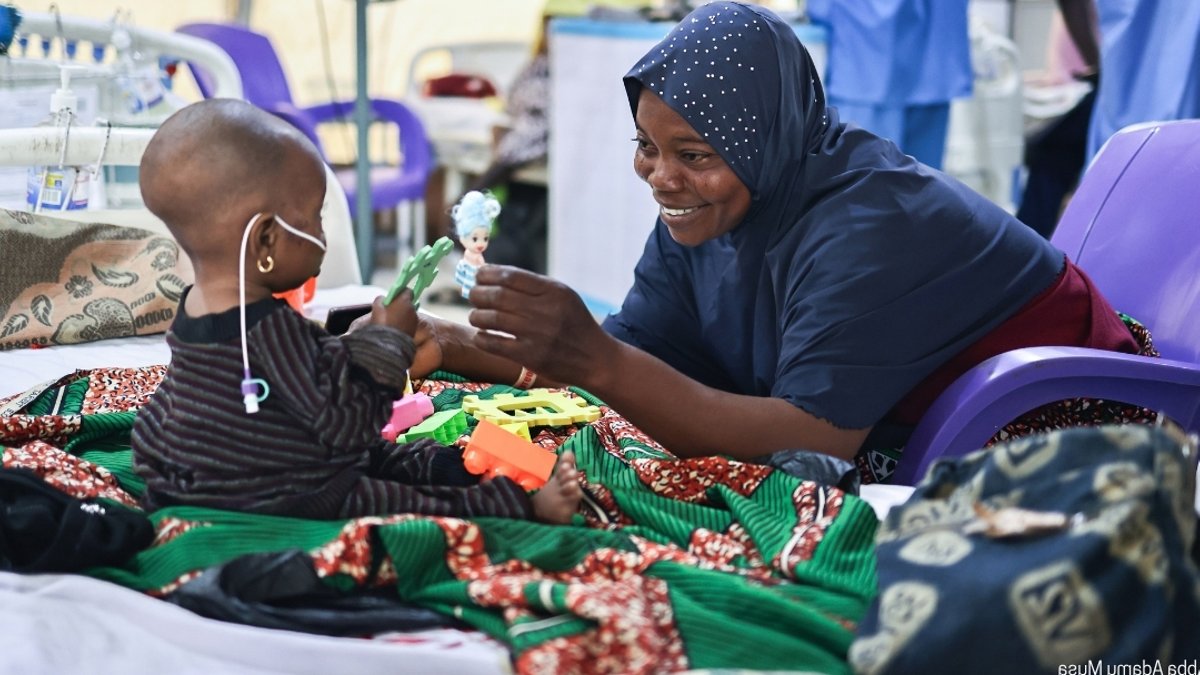
The intensive care unit of the Médecins Sans Frontières (MSF) Nilefa Kiji nutrition facility in Maiduguri, Borno state, Nigeria, is filled with the cries of children battling severe acute malnutrition. Nurses move from bed to bed checking vital signs, dispensing therapeutic milk, and reassuring anxious parents. The children arrive weakened, often with secondary infections such as measles, diphtheria, or malaria. Treatment can last from one week to a month, during which caregivers, mostly mothers, remain at the hospital, often far from home and burdened with worries about their families.
The emotional toll on these caregivers is rarely measured, yet it directly affects their ability to follow medical advice and support their children’s recovery. Fatima Ibrahim spent three weeks at Nilefa Kiji with her 23-month-old daughter, Aisha, who had survived meningitis and convulsions. While grateful for her daughter’s progress, Fatima’s mind was consumed by her eight other children at home. “I am so worried about my children,” she said. “Yesterday my older daughter had fever, and her father did not have money for medication. Yesterday, I cried and had no appetite.”
Stories like Fatima’s highlight a critical gap in malnutrition treatment: the psychological burden on caregivers is often ignored. Medical records track recovery rates, but they cannot capture the anxiety, sleepless nights, or guilt that accompany weeks of separation and uncertainty. For Latifat Abdulkareem, the stress of watching her seven-month-old daughter, Aisha, battle fever, cough, and vomiting left her unable to sleep for days. “I felt terrible,” she recalled. “I even thought my daughter would not make it.”
Read Also: South Africa struggles with illegal weight loss drugs
MSF has begun addressing this oversight by integrating mental health and psychosocial support into its malnutrition programmes. Upon arrival, caregivers receive psychological first aid, followed by individual counselling and group sessions where they can share experiences, express their fears, and learn coping strategies. Children also participate in structured play activities that help restore a sense of normalcy during recovery.
For Halima Mohammed, the strain extended beyond emotional distress. After 45 days of moving between hospitals with two sick children, she described a collapse in her own health. “I was having good sleep before my children fell ill,” she said. “Now I barely sleep. For the past two days, I have not been feeling well myself.” Her plea for her daughter’s discharge was denied, as medical staff insisted her child was not yet stable.