
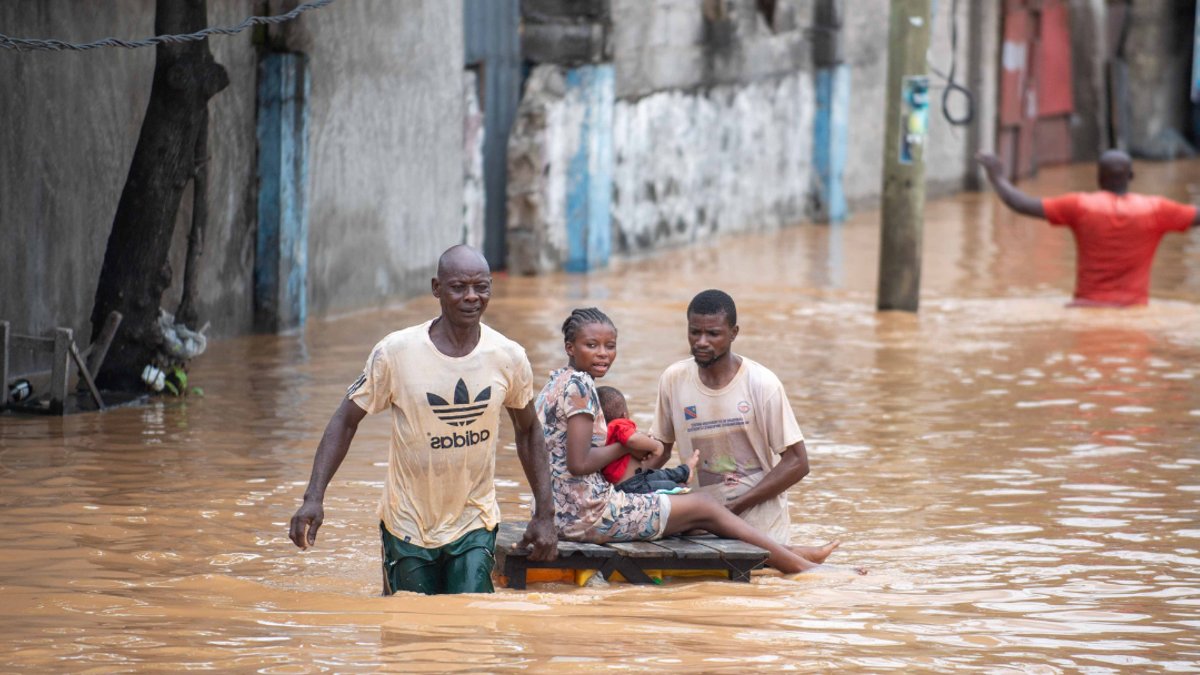
A recent study spanning four African nations reveals that roughly a quarter of individuals who experienced flooding suffered mental health issues. Protecting people from the traumatic effects of floods could, in turn, mitigate these mental health concerns. As global warming intensifies, leading to more frequent and severe storms, the impact of climate change on health may be more far-reaching than acknowledged, with lasting effects long after the initial disaster has passed.
A snapshot of a continent
Researchers from four nations spanning West, East, and Southern Africa examined how flooding impacts mental health, highlighting both similarities and regional variations in their findings. According to project leader Collins Iwuji, an epidemiologist at AHRI, the study expands understanding of flood-related mental health challenges, though it does not cover the entire continent.
The study surveyed 5,336 individuals, with roughly 1,000 to 1,600 participants in each country, ensuring equal representation between those affected by floods and those who were not. The research covered diverse urban and rural settings, varying household sizes, and different socioeconomic backgrounds, creating a broad cross-section of communities.
Across the sample as a whole, signs of mental health problems were more common among people who had lived through a flood than among those who had not. When looking at data from all four countries combined, one in 12 people who had been in a flood showed signs of serious anxiety, and one in eight had symptoms pointing to depression. One in five flood survivors’ mental state looked like that of someone with post-traumatic stress disorder, a condition in which you feel like you repeatedly relive a terrifying event in some way, often with severe anxiety to boot.
South Africa mirrored this trend, but the proportion of flood survivors reporting mental health struggles was over double the average.
High waters, low feelings
The findings show that extreme weather events like a flood add another layer of stress to people’s lives when they already live in poverty or without good social support. “When a disaster hits, people suffer because it adds to the hardship they’re facing every day,” says Vasco Cumbe, a psychiatry expert on the research team and based in the Sofala province where the Mozambican part of the study was done.
But people’s distress compounds, he says. In communities like the ones included in the study, a next storm often hits before people can fully recover from the previous one. When the ability to build back livelihoods and infrastructure like houses, roads and clinics is already poor, an additional shock can push people closer to developing mental health problems that mess with everyday life.
Related Post: South Africa tracks vaccine follow up doses
In the aftermath of a flood, people usually get help with basic needs like food, water and clothes, says Cumbe, but mental health issues are often not considered. Not paying attention to the effect of weather disasters on people’s mental state is “a gap”, not only in response but also in preparedness, he says.
Post-traumatic stress disorder was the most prevalent mental health issue among flood survivors across all four nations. However, the extent of this increase varied by country. For instance, Mozambique saw PTSD symptoms in less than 1% of unaffected individuals, but the rate jumped to 55 times higher among those who had experienced flooding.
Specialist care is scarce
A person with PTSD is hyper vigilant, explains Cumbe. They never relax. They are always waiting for danger to hit again. They seem to carry on with their lives. But always expecting danger means someone lives in a constant state of fear. It becomes hard to bounce back.
With only about two specialised mental health workers for every 100,000 people in Africa, getting help is almost impossible for many. In this way, “what starts as a psychological condition can trigger a physical illness later”, explains Cumbe.
Youth and future risks
The trauma of a flood seems to hit young people hard. They had more anxiety than other age groups. They had higher levels of PTSD. The baseline levels in the control groups were similar to that in older people.
Yet the psychological fallout of a weather disaster is often overlooked in planning for emergency response. “People think it’s not important to raise mental health issues”, explains Cumbe. They shelter people, they give food, they give water. But they also need to pay attention to the psychological side.