
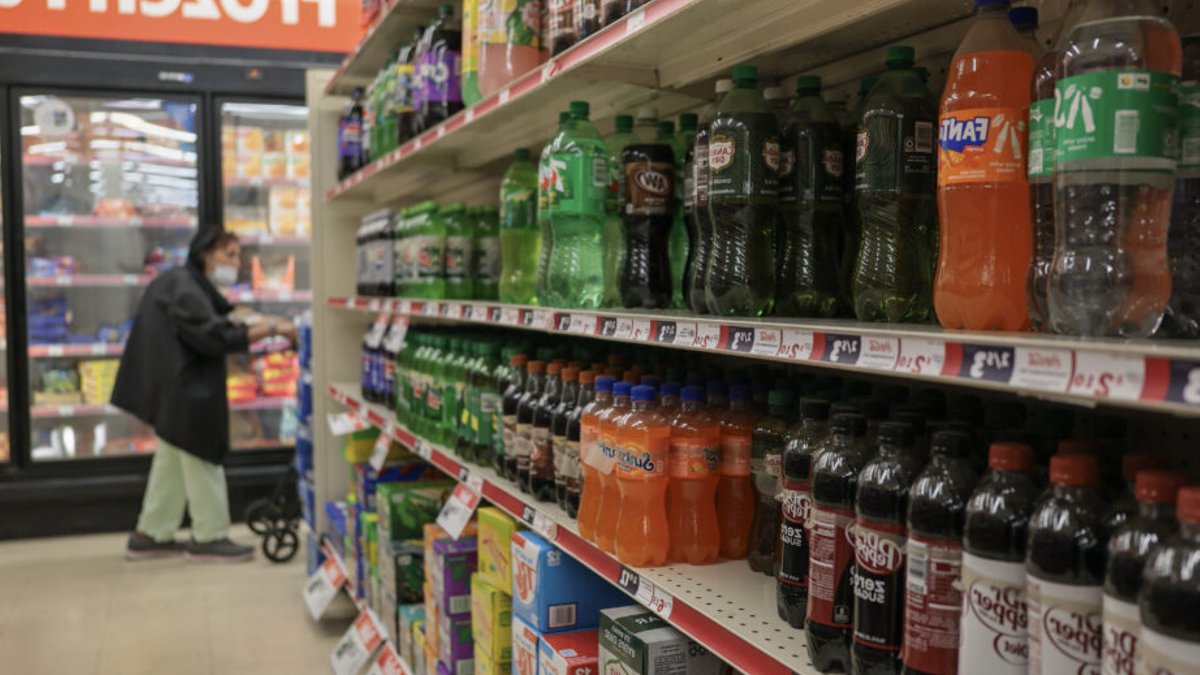
Soda purchases among Supplemental Nutritional Assistance Program (SNAP) recipients fell by about 12% after new restrictions took effect in 10 states, according to a study published by the National Bureau of Economic Research. The research, which has not yet been peer-reviewed, examined grocery purchase data from 15,000 households during the first six months of 2026, focusing on those living in the 10 states that had implemented the bans.
The data indicates that the restrictions resulted in a person consuming roughly 34 fewer 12-ounce cans of soda per year. This reduction translates to an estimated 34,000 fewer new cases of type 2 diabetes in the United States over the next decade. It also leads to about $1 billion in annual savings for the health care system.
Robert Paarlberg, a professor emeritus of political science at Wellesley University, said the 12% cut in soda purchases for the 12% of Americans who rely on the program “doesn’t add up to a huge national health gain.” He wonders if the stigma associated with the restrictions is worth the small health benefit.
Related: Courts split on gender-affirming care rulings
The bans are currently suspended in five states under orders from a federal judge, though 23 states have received waivers from the U.S. Department of Agriculture to implement them. The policy changes were part of a broader effort by the “Make America Healthy Again” movement to limit the purchase of junk food using federal benefits.
Benjamin Chrisinger, an assistant professor of community health at Tufts University, noted that the study’s data, while useful, may not be fully representative of the broader population of SNAP recipients. He also pointed out that the study found SNAP recipients used up to 39% of the money they didn’t spend on soda to purchase other sugary drinks and fruit juices that didn’t fall under the states’ restrictions.
Paarlberg suggested that a better alternative might be to tax sugary beverages. He cited Philadelphia’s example, where a beverage tax led to a 31% cut in consumption across all groups, not just SNAP recipients. The city used the revenue for neighborhood projects to offset the tax’s regressive nature, and the mayor avoided the stigma by claiming the policy was for revenue, not public health.
For the people living on tight budgets, the trade-off is complicated. If the goal is to reduce sugar consumption, the study shows the current restrictions are not full enough to stop recipients from finding other sugary options. The research also found that the restrictions made recipients more likely to report feeling judged or disrespected, a finding that Chrisinger called concerning.
Related: Kyoto University partners with BostonGene on cancer
Sugar-sweetened beverages are responsible for about 1 million new cases of heart disease and 2 million new cases of type 2 diabetes worldwide each year, according to a 2025 study published in Nature Medicine. The NBER study’s authors estimate that the drop in soda consumption caused by the SNAP restrictions would reduce the risk of developing type 2 diabetes by 2.6% over the next 10 years.
Notowidigdo emphasized that while $1 billion sounds like a lot of money, it is a drop in the bucket compared to the U.S. health care system’s total spending of about $5.3 trillion in 2024. However, he noted that the figure represents a tangible financial benefit for the system.
Paarlberg argued that a tax on sugary drinks could achieve similar health goals without the stigma attached to the current SNAP restrictions.