
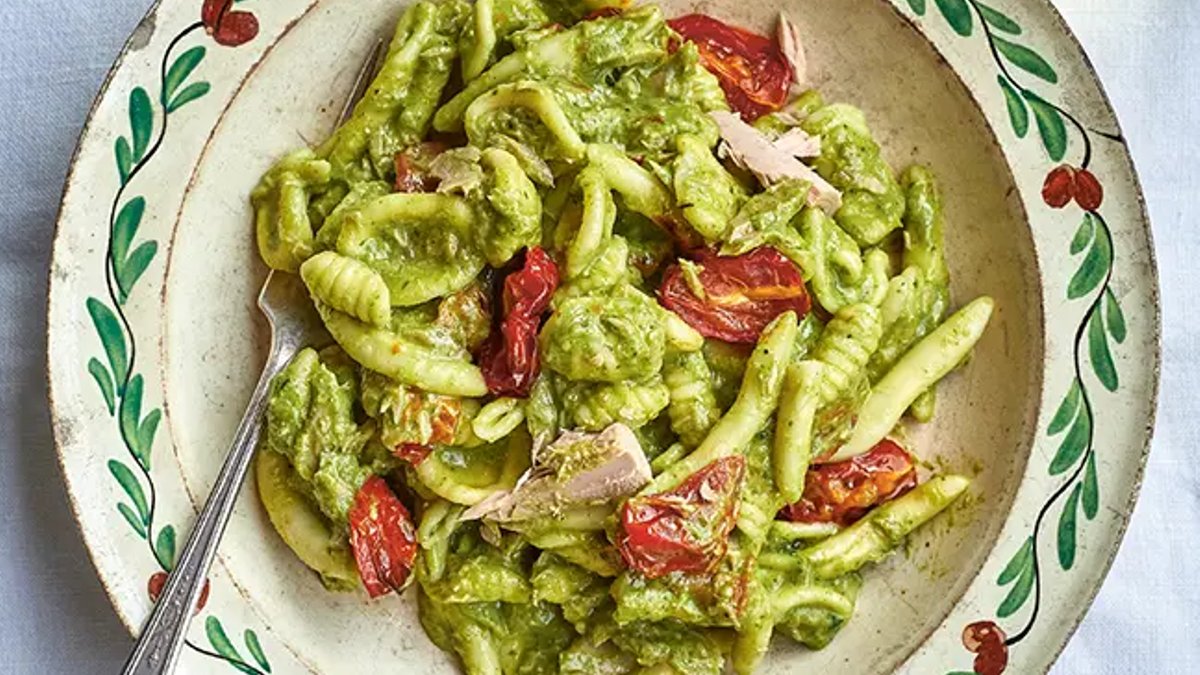
Pasticcio Carlofortino is a pasta dish that captures the flavor of a Sardinian fishing village in a single serving. The recipe appears in the new cookbook Eat Like A Sardinian, where chef Francesco Mattana highlights it as a personal favorite.
Origins in a Ligurian-influenced town
The dish comes from Carloforte, a fishing village on the island of Sardinia shaped by Ligurian influence. Local cooks traditionally mixed pesto, tomato sauce, preserved tuna and any pasta they had on hand, creating a hearty meal that stretched limited supplies.
Mattana’s version stays true to that heritage, combining basil pesto, roasted cherry tomatoes and quality tuna preserved in olive oil. The result is described as both flavorful and resourceful.
Key ingredients and preparation
To make the recipe you need 200 g of sweet baby plum or small cherry tomatoes, 30 g of fresh basil, 60 ml of extra-virgin olive oil, 30 g of lightly toasted pine nuts, one garlic clove, 25 g each of grated pecorino and Grana Padano, 200 g of trofie or casarecce pasta, and 150 g of preserved tuna. Fine sea salt is used for seasoning.
First, the tomatoes are spread on a tray, drizzled with olive oil, seasoned with a pinch of salt and baked at 220 °C for 12-15 minutes until softened and slightly charred.
Read Also: Golden Door Chef’s New Cookbook Emphasizes Garden-to-Table Cooking
While the tomatoes roast, a food processor blends basil, oil, pine nuts, garlic and a pinch of salt into a smooth paste. The grated cheeses are added and blended again until a thick pesto forms; a few tablespoons of water may be used to adjust consistency.
In a large pot, salted water is brought to a boil and the pasta is cooked al dente according to the package directions. After draining, a cup of the cooking water is reserved.
The hot pasta returns to the pot, off the heat, where the pesto is stirred in until the noodles are evenly coated. If the sauce is too thick, a splash of the reserved water loosens it. The drained tuna and roasted tomatoes are folded in, and the dish is given a final stir before serving.
He notes that the tuna can be omitted for those who prefer a simple basil pesto pasta. He also recommends making a larger batch of pesto, which keeps well refrigerated for up to five days or frozen for three months.