
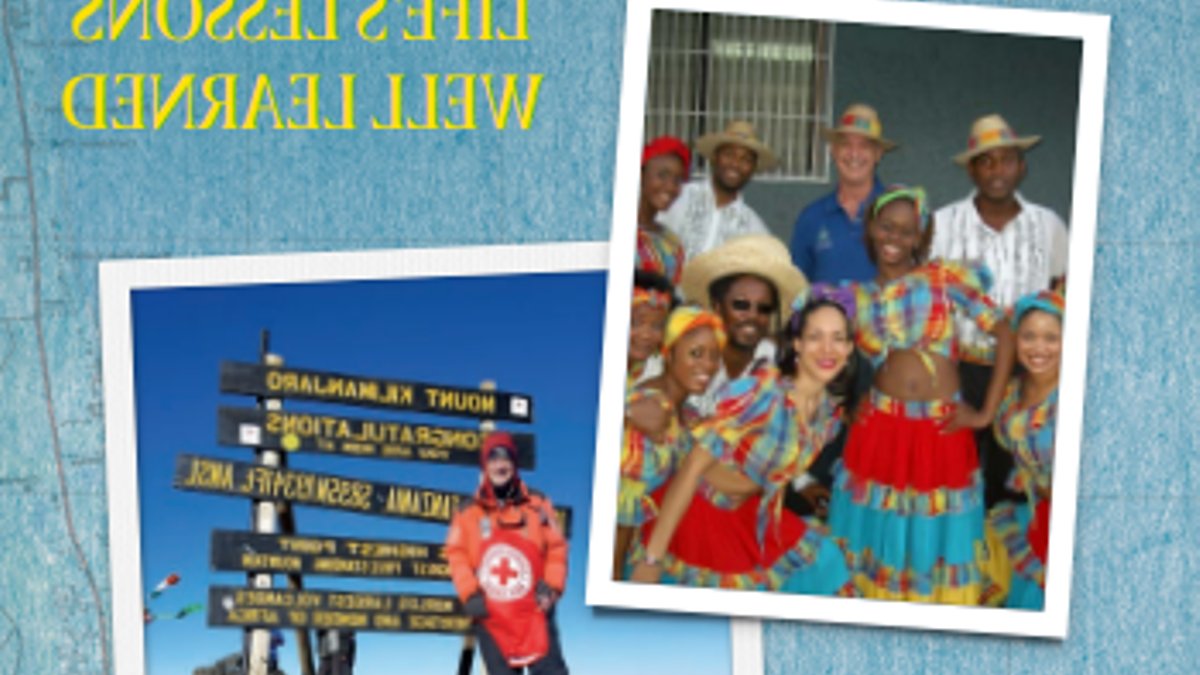
A quantity surveyor who spent decades working across the Caribbean now measures elevation rather than time. At 80, he still climbs thousands of vertical feet each season, not because of a structured fitness regimen, but because physical activity has always been a natural part of his existence.
The habit started with a ski watch given to him on his 50th birthday. It recorded both runs and descent, turning vertical gain into a personal benchmark. His wife, Vivian, would urge him to stop after a long morning on the slopes. He would respond: “Let’s make it an Everest Day—twenty-nine thousand feet!” She would sigh, pick up her poles, and follow him back to the lift. This pattern, challenging limits without formal training, has shaped their lifestyle for half a century.
He never intended to become an athlete. While building his career in the Caribbean, movement became the common thread linking work, travel, and relationships. In his 20s, he learned to water ski in Jamaica. A decade later, a friend took him to Boyne Highlands in Michigan for his first ski trip, sparking a lifelong passion. Within a year, he sought instruction from Rob Tiernan, a former Montana park ranger who became his skiing mentor. Over the years, they skied together so often that instructors joked they were “clones” on the mountain.
Read Also: Simple Habits Promote Good Oral Health
By his 50s, the couple had expanded beyond skiing. They trekked the Jomolhari route in Bhutan, crossing passes at 16,000 feet in the Himalayas. In their 60s, they climbed Blue Mountain peak in Jamaica twice. In Kauai, they hiked 1,600 feet down a trail and back up, Vivian enduring a broken toe the entire way. Back in the hotel that evening, she said, “For a sixty-seven and sixty-eight-year-old couple, we’re not doing too badly!” He couldn’t have agreed more.
Movement as a Daily Habit
Their success stems from consistency and rejecting age as a barrier. They’ve never used porters or relied on lifts for equipment. Their gym has always been the world, whether hiking in Georgia, exploring Baku’s Old Town, or ascending Camelback Mountain in Phoenix, a trail that rises 1,400 feet in under a mile. At 79, he still reaches the car without strain.
Their method isn’t about extreme endurance but integrating movement into daily life. They’ve hiked 2,000 vertical feet in Mallorca’s Tramuntana mountains, trekked to a frozen waterfall in an Azerbaijan cave, and skied across Colorado, Montana, Switzerland, France, and British Columbia. During an eight-day trip to Aspen, they logged 150,000 vertical feet. In Méribel, they covered 142,000 feet in a week.
Read Also: Biomarkers Unveil Hidden Health Insights
Age, he observes, is a fact, not a restriction. No one told them they were too old to trek in Bhutan at 55 or too old to hike in Azerbaijan at 78. They simply went. The only limit is self-imposed.
Adaptability Over Avoidance in Later Years
Beyond skiing, their routine included unexpected forms of movement. In their 70s, they began practicing Tai Chi at Camana Bay in the Cayman Islands, turning Sunday mornings into a blend of discipline and relaxation. Vivian, who had broken a toe hiking in Kauai, insisted on continuing despite the pain, arguing that adaptability, not avoidance, was essential. Their daily walks through Baku’s Old Town, with its narrow cobblestone streets, forced a slower pace, while scrambles up Camelback Mountain in Phoenix tested endurance on a relentless gradient. Even at 79, the surveyor still carried his own ski boots to the lift in Aspen, refusing to delegate tasks others might outsource.
His memoir, More than Just the Climb, Life’s Lessons Well Learned, publishing November 24, 2025, weaves his personal journey alongside the transformation of the Cayman Islands. As a founding member of the Cayman National Cultural Foundation and the National Gallery of the Cayman Islands, he received recognition from Queen Elizabeth II in 2012 for services in preserving and developing Caymanian culture. In 2025, the Cayman Islands Government named him a Legacy Builder for laying the groundwork for future economic development since 1970. The book will intertwine these two strands, personal endurance and professional legacy, under a single philosophy: life is built by action, not by waiting.