
“`html
The Challenge of Modern Health Information
In an era defined by the “infodemic,” staying informed about health news feels like trying to drink from a firehose. Between sensationalist headlines, conflicting dietary advice, and the rapid-fire release of medical pre-prints, the average person is often left more confused than empowered. Mastering health news isn’t just about reading more; it’s about developing a lens of critical literacy.
Whether you are a wellness enthusiast, a medical professional, or a concerned citizen, the ability to filter noise from signal is a superpower. This guide provides an accelerated 11-day roadmap to help you navigate the complex landscape of medical journalism, scientific research, and health trends.
Phase 1: Building a Foundation of Credibility (Days 1-3)
The first step in mastering health news is auditing where your information comes from. Most people consume “secondary” or “tertiary” sources—news reports about reports. To master the field, you must go closer to the source.
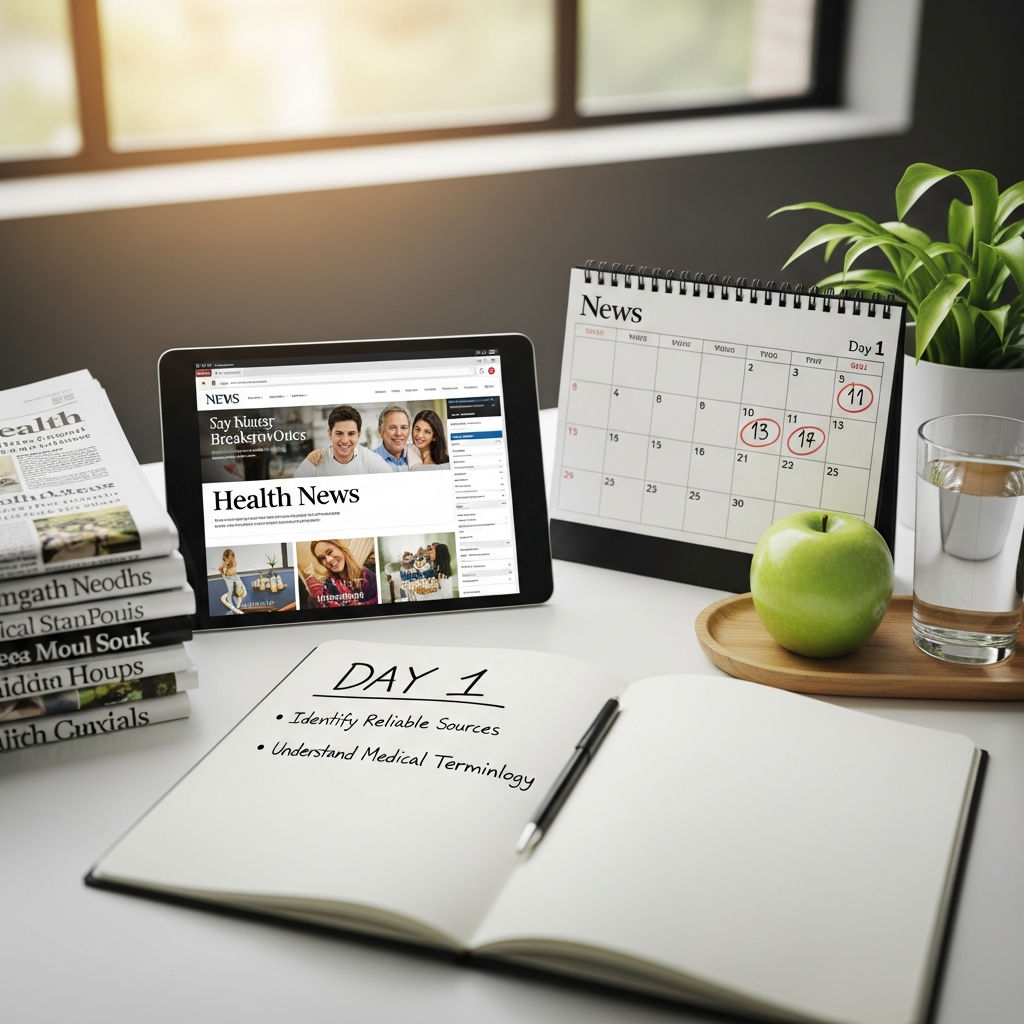
Day 1: Audit Your Digital Ecosystem
Your first day is about “informational hygiene.” Open your social media feeds and news apps. Unfollow accounts that use “fear-mongering” language or promise “miracle cures.” Instead, follow established health organizations and reputable science communicators. Seek out sources like the Mayo Clinic, Harvard Health Publishing, and STAT News.
Day 2: Primary vs. Secondary Sources
Understand the difference between a news article and a peer-reviewed study. A news article is a summary written by a journalist; a primary source is the actual study published in a journal like The Lancet or The Journal of the American Medical Association (JAMA). Today, practice finding the original study link at the bottom of a health news story.
Day 3: Identifying Media Bias and Sensationalism
Health news is often written to generate clicks. Look for “red flag” words: Cure, Miracle, Breakthrough, Secret, and Hidden. Master the art of the “Sift” method: Stop, Investigate the source, Find better coverage, and Trace claims back to the original context.
Phase 2: Decoding the Science (Days 4-6)
Once you have reliable sources, you need to understand the language of science. You don’t need a medical degree, but you do need to understand how evidence is built.
Day 4: Correlation vs. Causation
This is the most common trap in health news. Just because people who drink coffee live longer doesn’t mean coffee *causes* longevity; it might mean coffee drinkers have higher incomes or better access to healthcare. Spend today looking at “association” studies and asking: “Is there another factor at play?”
Day 5: Understanding the Hierarchy of Evidence
Not all studies are created equal. Use today to learn the “Evidence Pyramid”:
- Meta-analyses & Systematic Reviews: The gold standard; they look at all available data on a topic.
- Randomized Controlled Trials (RCTs): High-quality studies that test an intervention against a control group.
- Observational Studies: Useful for patterns, but cannot prove cause and effect.
- Animal/In-Vitro Studies: Interesting, but rarely translate directly to human health.
Day 6: Demystifying Jargon (P-values and Sample Sizes)
A study of 10 people is a pilot; a study of 10,000 is a significant data set. Learn what “statistical significance” means. If a study has a “p-value” of less than 0.05, it means the results are unlikely to have happened by chance. However, remember that “statistically significant” doesn’t always mean “clinically meaningful.”
Phase 3: Contextualization and Conflict (Days 7-9)
Health news doesn’t exist in a vacuum. It is influenced by politics, economics, and human psychology.
Day 7: Spotting Conflicts of Interest
Always ask: “Who paid for this study?” A study on the benefits of sugar funded by a beverage company should be viewed with skepticism. Most reputable journals require a “Disclosures” section. Today, practice scrolling to the bottom of a research paper to check for funding sources and researcher ties to industry.
Day 8: Tracking Trends via Newsletters
Mastery requires staying updated without being overwhelmed. Subscribe to curated newsletters that do the heavy lifting for you. Recommendations include:
- The Pulse (NPR): For a look at the intersection of health and culture.
- Kaiser Health News (KHN): Excellent for health policy and insurance news.
- Ground News: To see how different political sides report on the same health issue.
Day 9: Understanding Public Health Policy
Health isn’t just about biology; it’s about policy. Learn the roles of the FDA (drug and food approval), the CDC (disease tracking), and the WHO (global health coordination). Understanding their mandates helps you interpret news about new regulations or outbreaks.
Phase 4: Synthesis and Application (Days 10-11)
The final stage is moving from a passive consumer to an active synthesizer of health information.
Day 10: Fact-Checking Like a Professional
When you see a viral health claim, use professional fact-checking tools. Websites like HealthFeedback.org use scientists to review viral claims. Snopes is excellent for debunking medical myths. Today, take a “too good to be true” health claim from social media and run it through these filters.
Day 11: Building Your Daily Routine
Mastery is a habit, not a destination. Create an 11-minute daily routine:
- Minute 1-3: Scan headlines from a trusted aggregator (like Google Scholar Alerts or a medical news app).
- Minute 4-8: Read one full article or study abstract that challenges your current beliefs.
- Minute 9-11: Summarize what you learned in one sentence to solidify the information.
Conclusion: The Empowered Health Consumer
By the end of these 11 days, your relationship with health news will have fundamentally shifted. You will no longer be swayed by every “superfood” trend or panicked by every alarmist headline. Instead, you will have the tools to look at data objectively, question the source, and understand the nuance of medical science.
Remember that science is a self-correcting process. Mastery doesn’t mean knowing everything; it means knowing how to find the truth as it evolves. Keep questioning, keep reading, and stay curious. The health of your mind is just as important as the health of your body.
“`