
“`html
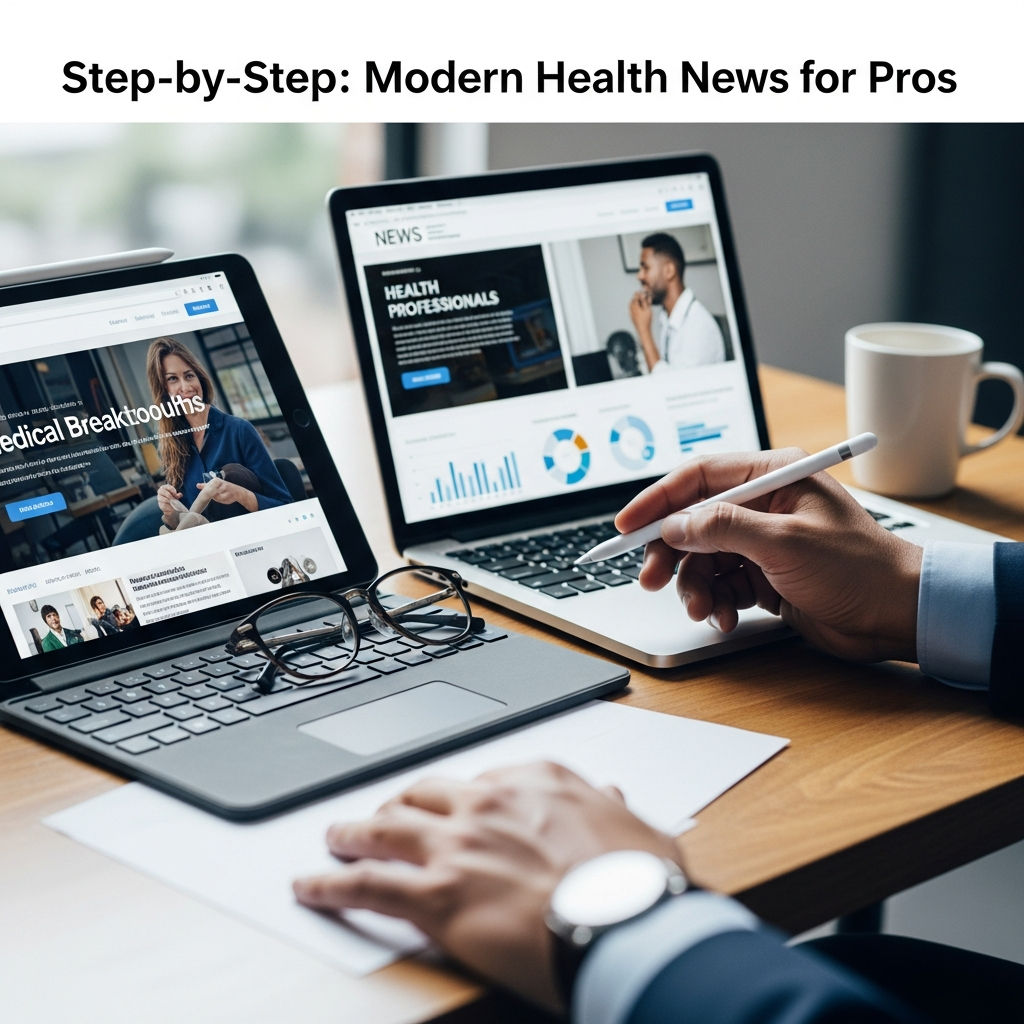
Step-by-Step Guide: Navigating Modern Health News for Healthcare Professionals
In the rapidly evolving landscape of medical science and biotechnology, staying updated is no longer a luxury—it is a clinical and professional necessity. However, we are currently living in an era of “infodemic,” where the sheer volume of medical papers, clinical trial results, and regulatory updates can overwhelm even the most seasoned veteran. For the modern healthcare professional, the challenge is not finding information, but filtering the signal from the noise.
Modern health news is no longer confined to the monthly arrival of a printed journal. It is a 24/7 stream of pre-prints, social media breakthroughs, AI-driven analytics, and global health alerts. This guide provides a strategic, step-by-step framework to help professionals master the flow of health information, ensuring they remain at the cutting edge of evidence-based practice.
Step 1: Curate a Multi-Layered Source Hierarchy
The first step in managing modern health news is to move away from a “one-size-fits-all” approach. Professionals must curate a hierarchy of sources that balance speed with peer-reviewed gold standards.
Primary Literature and Aggregators
The foundation of any professional news diet should be the primary literature. However, reading every journal is impossible. Utilize aggregators like PubMed and Google Scholar, but set specific “Alerts” for keywords related to your specialty. High-impact journals such as The Lancet, JAMA, and The New England Journal of Medicine (NEJM) offer “Online First” sections that provide early access to groundbreaking studies before they hit print.
Reliable Trade News Outlets
For context on policy, healthcare business, and pharmaceutical trends, trade outlets are essential. Sites like Stat News, Medscape, and FierceHealthcare provide the “why” behind the clinical data. These platforms are excellent for understanding how new regulations or drug approvals will affect the broader healthcare ecosystem.
Step 2: Leverage AI and Automation Tools
In the digital age, manual searching is inefficient. Professionals should leverage automation to bring the most relevant news directly to their dashboard. This reduces “search fatigue” and ensures no critical updates are missed.
- RSS Feeds and Readers: Use tools like Feedly or Inoreader to aggregate feeds from various medical journals and health news sites into a single, organized interface.
- AI Summarization: Modern AI tools like Consensus, Scite.ai, or Elicit can help summarize complex research papers. These tools allow you to ask natural language questions (e.g., “What is the latest consensus on GLP-1 agonists for cardiovascular health?”) and receive evidence-backed summaries.
- Newsletter Curation: Subscribe to high-quality, expert-curated newsletters. For many pros, Substack has become a hub for deep-dives by leading epidemiologists and clinicians who provide nuanced takes on current health events.
Step 3: Mastering the Art of Pre-print Critical Appraisal
The COVID-19 pandemic accelerated the use of pre-print servers like medRxiv and bioRxiv. While these platforms offer the fastest access to new data, they have not yet undergone formal peer review. For a professional, knowing how to navigate these is vital.
When reading modern health news derived from pre-prints, apply the following filter:
- Check the Sample Size: Is the study powered sufficiently to support its conclusions?
- Identify Funding Sources: Are there significant conflicts of interest that could bias the findings?
- Look for Community Peer Review: Platforms like PubPeer allow other scientists to comment on papers in real-time, often highlighting flaws long before a formal retraction might occur.
Step 4: Engage with Professional Digital Communities
Modern health news is increasingly social. Professional discourse has moved to platforms where real-time debate happens among global experts. This “collaborative intelligence” is a hallmark of the modern pro.
The Rise of “Med-Social”
While Twitter (now X) was once the hub for “MedTwitter,” many professionals are migrating to LinkedIn and specialized platforms like Doximity or Sermo. Following key opinion leaders (KOLs) in your field allows you to see how experts interpret new data. Often, the critique of a study on these platforms is as valuable as the study itself.
Podcasts for the On-the-Go Pro
For professionals with long commutes or busy schedules, medical podcasts are a primary source of modern health news. Shows like The Peter Attia Drive, NEJM This Week, and The Curbsiders offer deep-dive clinical discussions that bridge the gap between academic data and clinical application.
Step 5: Distinguish Between Consumer Health Trends and Clinical Evidence
As a professional, you will frequently be asked by patients or stakeholders about “trending” health news. Modern health news often goes viral on platforms like TikTok or Instagram before it hits the clinical mainstream. A pro must be able to debunk or validate these trends quickly.
Maintaining a “Bunk-Detection” mindset is crucial. Modern health news for pros involves verifying if a viral headline is based on a mouse study, a small-scale human trial, or merely anecdotal evidence. This distinction is vital for maintaining professional authority and ensuring patient safety.
Step 6: Synthesize and Archive for Future Application
Information is only useful if it is retrievable. The final step in a professional health news workflow is synthesis. How do you integrate this new information into your practice or business strategy?
- Digital Brain Tools: Use applications like Notion, Obsidian, or Zotero to clip and tag important articles. Create a “Second Brain” where you can categorize news by topic (e.g., “Immunotherapy Updates,” “Digital Health Regulations”).
- Continuing Medical Education (CME): Many modern news platforms now offer CME credits for reading their curated updates. Ensure your news consumption habits are also helping you fulfill your professional licensing requirements.
The Future of Health News: Precision Information
Looking forward, the trend in modern health news is moving toward “Precision Information.” Just as we have precision medicine tailored to an individual’s genetics, we are seeing the rise of hyper-personalized news feeds driven by AI. These systems will learn your specialty, your patient demographic, and your research interests to provide a bespoke stream of information.
However, the human element remains irreplaceable. The professional’s role is to apply clinical judgment to the data provided. By following this step-by-step approach—curating sources, leveraging AI, appraising pre-prints, engaging in communities, and archiving insights—you can transform the overwhelming flood of modern health news into a powerful professional asset.
Summary Checklist for Pros:
- Are my PubMed alerts active for my specific niche?
- Do I have an RSS reader or AI tool to filter daily headlines?
- Am I following at least five Key Opinion Leaders in my field on professional social media?
- Do I have a system (like Zotero or Notion) to save and tag “must-read” studies?
- Can I explain the difference between this week’s viral health trend and the actual clinical data?
By mastering these steps, you stay ahead of the curve, providing better care, making smarter investments, and leading the conversation in the ever-changing world of modern health.
“`